

This post contains affiliate links. This means I earn a small commission at no cost to you. You can view my affiliate disclosure here.
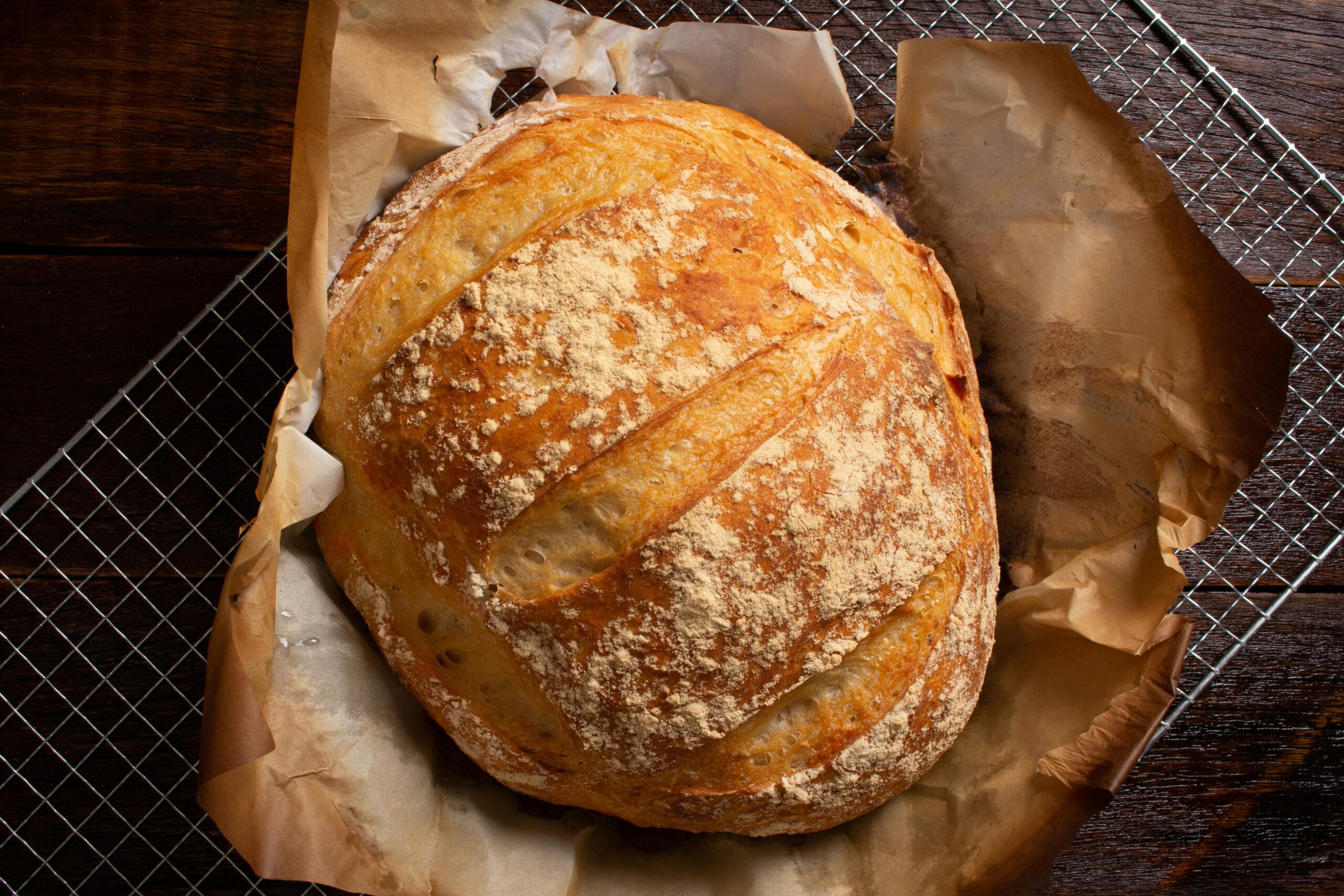
Slow-fermented and gently folded, no knead sourdough bread fills the home with the comforting aroma of crusty artisan loaves while requiring only simple ingredients, time, and patience. No rushing, no heavy kneading: just time, wild yeast, and a bowl of dough slowly transforming into bread. No knead sourdough brings us back to the old ways of baking, when patience did the work and the kitchen filled with the gentle, tangy scent of fermentation.

This method is perfect for beginners and busy homesteaders alike, giving you a beautiful artisan-style loaf with minimal hands-on time.
My sourdough was flat and business was slow
When I first started homesteading, my sourdough was dense and flat, my garden struggled, and it seemed like I was scrambling to get people to notice my business, let alone, buy my products. And for a time, I burnt out.
After years of trial and error, analyzing hundreds of businesses from other sectors, and just pure grit...
I created a free Zero to Homestead Skool Community: a place where homesteaders of all levels share wins, troubleshoot challenges, and get guidance from experienced peers. By joining, you’ll access step-by-step guides to build traditional skills (sourdough, fresh milled flour, traditional foods, preserving, livestock, gardening, and more) plus full courses, workshops, and homestead business-building resources with a supportive network to help your homestead thrive.
Why No Knead Sourdough Works
No knead sourdough relies on long fermentation and simple stretch-and-folds instead of traditional kneading. This allows gluten to develop naturally, creating:
- An open, airy crumb
- Deep, complex flavor
- A crisp, crackling crust
- Less work and less mess
Time becomes your greatest tool.
Ingredients
- 100g active sourdough starter
- 375g water
- 500g bread flour or fresh milled hard wheat (sifted for lighter texture)
- 10g sea salt

How to Make No Knead Sourdough Bread
- Mix the Dough
In a large bowl, stir together starter and water. Add flour and salt. Mix until no dry flour remains. The dough will be shaggy. - Rest (Autolyse)
Cover and let rest 30–60 minutes. - Stretch and Folds
Perform 3–4 sets of gentle stretch-and-folds every 30 minutes over 2 hours. - Bulk Fermentation
Cover and let rise at room temperature 4–6 hours until puffy and bubbly. - Shape and Cold Ferment
Shape gently, place in a floured banneton, cover, and refrigerate overnight (8–16 hours). - Bake
Preheat Dutch oven to 475°F (245°C). Score the dough, bake covered 20 minutes, uncovered 20–25 minutes until deep golden.
Tips for Success
- Use an active, bubbly starter
- Let time do the work; don’t rush fermentation
- Handle gently to preserve air pockets
- Bake in steam (Dutch oven) for best oven spring
Frequently Asked Questions: No Knead Sourdough Bread
Do I really not need to knead this dough at all?
Correct. The long fermentation and gentle stretch-and-folds develop gluten naturally, so traditional kneading isn’t needed.
How long should bulk fermentation take?
At room temperature (70–75°F), 4–6 hours is typical. Cooler kitchens may need longer, while warm kitchens may be faster.
Can I use fresh milled flour?
Yes. Hard red or hard white wheat works well. You may need slightly more water and a longer fermentation for best texture.
Why is my no knead sourdough flat?
A weak starter, over-proofing, or under-proofing can cause poor rise. Make sure your starter is active and bubbly before mixing.
Do I have to cold ferment overnight?
While not required, an overnight cold ferment improves flavor, structure, and makes scoring and baking easier.
What if I don’t have a Dutch oven?
You can bake on a stone or sheet pan with steam added to the oven, though the crust may be slightly less crisp.
Why is my crumb gummy?
Gumminess usually means the loaf was underbaked or sliced too soon. Let the bread cool completely before cutting.
The Beauty of Slow Bread
No knead sourdough is a reminder that good things don’t need to be complicated. Flour, water, salt, and time come together to create nourishment that feeds both body and soul. It’s the kind of bread that invites butter, honey, soup, and long conversations around the table.
Join Our Sourdough & Homestead Baking Community
If you’re ready to deepen your sourdough skills and learn traditional, from-scratch baking with fresh milled flour, I’d love to invite you into my Skool community. Inside, you’ll find step-by-step sourdough lessons, troubleshooting help, printable recipes, and a warm group of homesteaders learning together. Come join us and grow your confidence one beautiful loaf at a time.
If you make this recipe, be sure to leave me a star rating and a comment below. Share what you made and tag me on Instagram@keepingitholistic! For more simple sourdough recipes & guidance, small-space gardening tips, and cozy, slow living inspiration, subscribe to my newsletter and follow me on YouTube and Instagram!
📖 Recipe

No Knead Sourdough Bread
Equipment
- 1 Dutch oven lined with parchment paper
- 1 Large bowl
Ingredients
- 100 g active sourdough starter
- 375 g water
- 500 g bread flour or fresh milled hard wheat sifted for lighter texture
- 10 g sea salt
Instructions
- In a large bowl, mix starter and water until milky.
- Add flour and salt. Stir until a shaggy dough forms and no dry flour remains.
- Cover and rest 30–60 minutes (autolyse).
- Perform 3–4 sets of stretch-and-folds every 30 minutes over 2 hours.
- Cover and bulk ferment at room temperature 4–6 hours until puffy and bubbly.
- Gently shape dough and place in a floured banneton or bowl.
- Cover and refrigerate overnight (8–16 hours).
- Preheat Dutch oven to 475°F (245°C).
- Score cold dough and bake covered 20 minutes, then uncovered 20–25 minutes until deep golden.
- Cool completely before slicing.
Notes

Hi, I’m Victoria!
I document our homesteading journey on YouTube: covering sourdough, fresh milled bread, gardening, and simple living. Click here to watch, learn, and be inspired to start your own homestead at home.


Comments
No Comments