

This post contains affiliate links. This means I earn a small commission at no cost to you. You can view my affiliate disclosure here.
There’s something timeless about pulling a golden, crackling loaf of sourdough artisan bread from the oven: the scent of fermentation, the blistered crust, the soft, airy crumb waiting beneath a serrated knife.
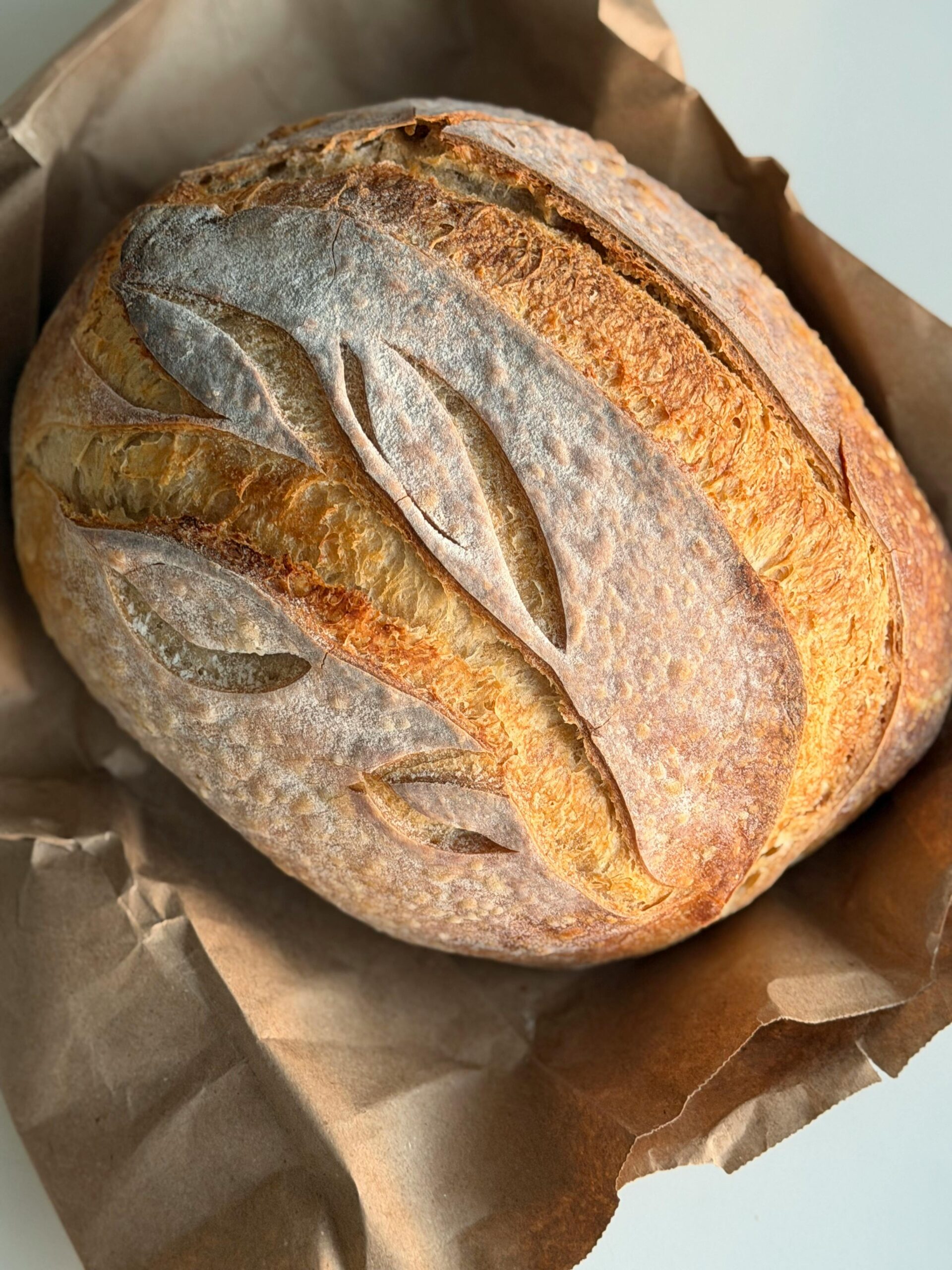
If you’ve ever wanted to master rustic sourdough artisan bread at home, this guide will walk you through the process step by step. No commercial yeast. No shortcuts. Just flour, water, salt, and an active sourdough starter working together the way bread has been made for centuries.
Baking sourdough isn’t just about food. It’s about rhythm, patience, and building skill in your own kitchen.
My sourdough was flat and business was slow
When I first started homesteading, my sourdough was dense and flat, my garden struggled, and it seemed like I was scrambling to get people to notice my business, let alone, buy my products. And for a time, I burnt out.
After years of trial and error, analyzing hundreds of businesses from other sectors, and just pure grit...
I created a free Zero to Homestead Skool Community: a place where homesteaders of all levels share wins, troubleshoot challenges, and get guidance from experienced peers. By joining, you’ll access step-by-step guides to build traditional skills (sourdough, fresh milled flour, traditional foods, preserving, livestock, gardening, and more) plus full courses, workshops, and homestead business-building resources with a supportive network to help your homestead thrive.
What Is Sourdough Artisan Bread?
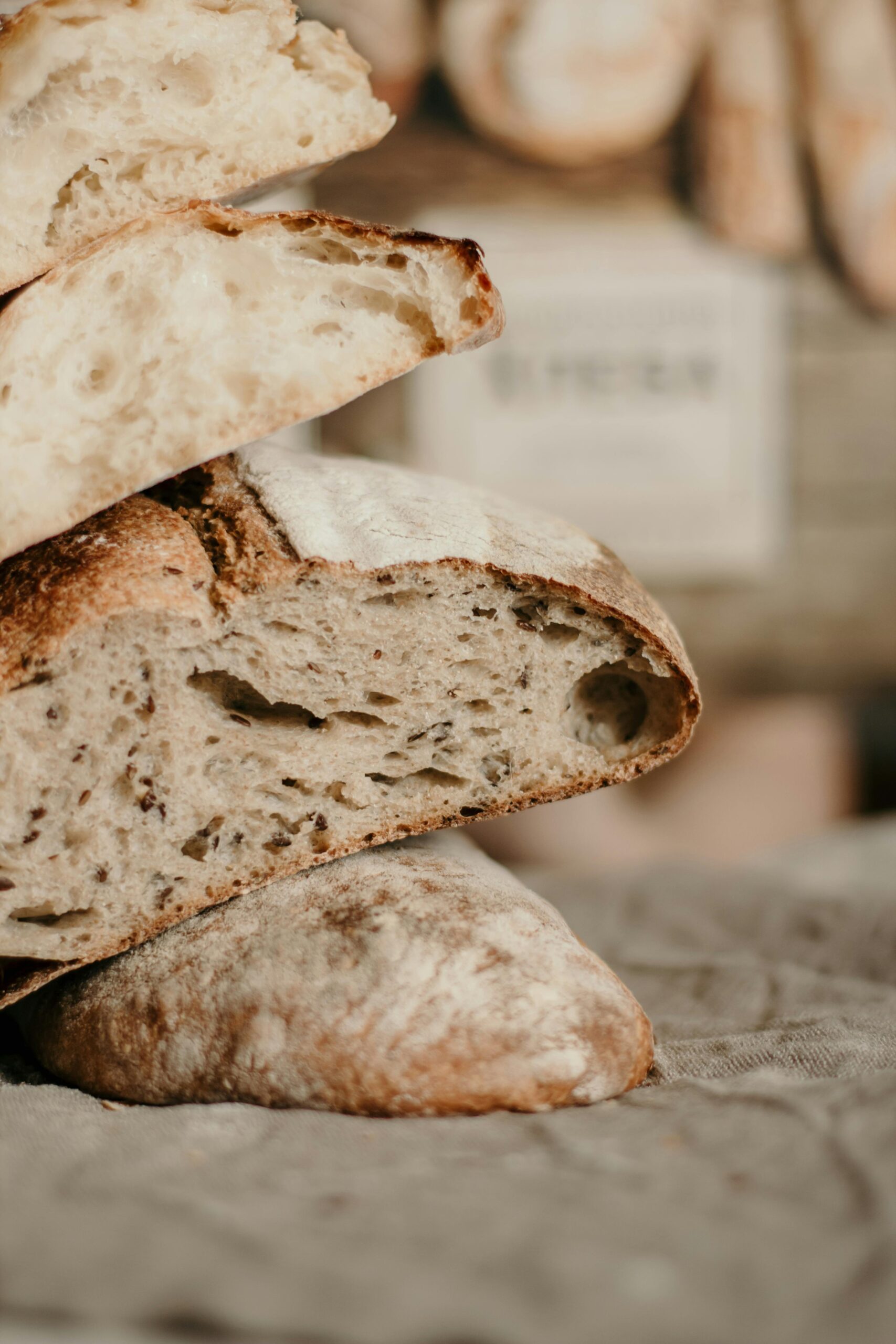
Sourdough artisan bread is a naturally leavened loaf made using a live sourdough starter instead of store-bought yeast. It’s known for a crisp, blistered crust, an open, airy crumb, deep, slightly tangy flavor, and slow fermentation for improved digestibility.
The long fermentation process not only enhances flavor but also helps break down gluten and phytic acid, making it gentler on the gut for many people.
Ingredients for Rustic Sourdough Artisan Bread
- 500g bread flour (or high-protein all-purpose flour)
- 350g filtered water (room temperature)
- 100g active sourdough starter (bubbly and recently fed)
- 10g fine sea salt
That’s it. Four simple ingredients.
Step-by-Step Sourdough Artisan Bread Recipe
1. Mix the Dough
In a large bowl, combine water and active starter. Stir to dissolve.
Add flour and mix until no dry patches remain. Cover and rest for 30 minutes (this is called the autolyse stage).
After resting, add salt and mix thoroughly until incorporated.
2. Stretch and Folds (Strength Building)
Over the next 2 hours, perform 3–4 sets of stretch and folds every 30 minutes:
- Wet your hands
- Gently stretch one side of the dough upward
- Fold it over itself
- Rotate the bowl and repeat
This builds gluten strength without kneading.
3. Bulk Fermentation
Let the dough rise at room temperature for 4–6 hours total (including stretch and folds), until it has increased in volume by about 50% and feels airy and slightly jiggly.
Fermentation time depends on your kitchen temperature. Warmer kitchens ferment faster.
4. Shape the Dough
Turn dough onto a lightly floured surface.
Gently shape into a tight round (boule) or oval (batard) by folding edges inward and creating surface tension.
Place seam-side up in a floured banneton basket or towel-lined bowl.
5. Cold Proof (Flavor Development)
Cover and refrigerate for 8–16 hours.
This slow fermentation improves flavor and makes scoring easier.
6. Bake in a Dutch Oven
Preheat oven to 475°F (245°C) with Dutch oven inside for at least 30 minutes.
Turn dough onto parchment paper, score the top with a bread lame or sharp knife, and carefully transfer into the hot Dutch oven.
Bake 20 minutes covered, then 20–25 minutes uncovered. The crust should be deep golden brown.
Cool completely (at least 1 hour) before slicing.
Tips for the Best Sourdough Artisan Bread
- Use an active, bubbly starter (passes the float test).
- Don’t rush fermentation. Flavor develops with time.
- Weigh ingredients for accuracy.
- Allow bread to cool fully before cutting.
- Practice consistently because sourdough improves with repetition.
Troubleshooting Common Sourdough Problems
Dense crumb?
Your starter may not be active enough, or bulk fermentation was too short.
Flat loaf?
Overproofed dough or weak shaping tension.
Gummy interior?
Bread was sliced too soon or underbaked.
Sourdough is skill-based. Each loaf teaches you something new.
Why Bake Sourdough Artisan Bread at Home?
Baking your own sourdough means no preservatives, better flavor, lower grocery costs over time, and a deeply satisfying kitchen rhythm. It’s one of the most empowering homestead skills you can learn.
And once you master the basic loaf, you can expand into sandwich bread, focaccia, bagels, cinnamon rolls, and more.
Frequently Asked Questions About Sourdough Artisan Bread
What is sourdough artisan bread?
Sourdough artisan bread is a naturally leavened bread made with a live sourdough starter instead of commercial yeast. It’s known for its crusty exterior, airy crumb, and deep, slightly tangy flavor developed through slow fermentation.
How do I know if my sourdough starter is ready to bake with?
Your starter should be:
- Doubled in size within 4–6 hours of feeding
- Bubbly throughout
- Slightly domed on top
- Passing the float test (a small spoonful floats in water)
An active starter is essential for a good rise and open crumb.
Why is my sourdough bread dense?
Dense sourdough artisan bread is usually caused by:
- An underactive starter
- Not enough bulk fermentation time
- Skipping stretch and folds
- Cutting the bread before fully cooled
Sourdough rewards patience and strong fermentation.
Why didn’t my bread rise in the oven?
If your loaf didn’t spring in the oven, it may be:
- Overproofed (fermented too long)
- Underproofed (not fermented enough)
- Lacking proper shaping tension
- Baked in an oven that wasn’t fully preheated
A hot Dutch oven and proper fermentation are key to oven spring.
Can I use all-purpose flour instead of bread flour?
Yes, but choose a high-protein all-purpose flour for best results. Bread flour typically produces a more open crumb and better structure due to higher protein content.
How long should I bulk ferment sourdough artisan bread?
Bulk fermentation usually takes 4–6 hours at room temperature (around 70–75°F), but this varies based on your kitchen temperature. Look for a 50% increase in size and a slightly jiggly texture rather than relying strictly on time.

Do I have to cold proof the dough overnight?
Cold proofing isn’t required, but it improves flavor, makes scoring easier, and fits better into a busy schedule. An 8–16 hour refrigerator proof is ideal for deeper flavor development.
Why is my sourdough gummy inside?
A gummy interior is usually caused by:
- Underbaking
- Slicing too soon
- Overhydrated dough
Always allow the loaf to cool at least one hour before cutting.
How do I store sourdough artisan bread?
Store at room temperature, cut side down on a wooden board or in a bread bag. Avoid refrigerating, as it dries out the loaf. For longer storage, slice and freeze.
Is sourdough easier to digest?
Many people find sourdough artisan bread easier to digest because the long fermentation process helps break down gluten and phytic acid. However, it is not gluten-free.
A Rustic Rhythm Worth Keeping
Sourdough artisan bread isn’t fast. It doesn’t come from a packet, instead it rises slowly on your counter, shaped by temperature, time, and your hands.
In a world that moves quickly, sourdough invites you to slow down, pay attention, build skill, and to nourish your family with intention.
Join My Skool Community
If you’re learning sourdough, fresh milled baking, food preservation, gardening, and practical homestead skills, I’d love to invite you into my Skool community.
Inside, we share:
- Step-by-step sourdough guidance
- Troubleshooting help
- Seasonal kitchen rhythms
- From-scratch meal systems
- Practical homestead planning
If you’re ready to bake with confidence and build real skills in your kitchen, come join us.
If you make this recipe, be sure to leave me a star rating and a comment below. Share what you made and tag me on Instagram@keepingitholistic! For more simple sourdough recipes & guidance, small-space gardening tips, and cozy, slow living inspiration, subscribe to my newsletter and follow me on YouTube and Instagram!
📖 Recipe

Rustic Sourdough Artisan Bread
Equipment
- large mixing bowl
- Kitchen scale
- Banneton basket or towel-lined bowl
- Dutch oven with lid
- Bread lame or sharp knife
Ingredients
- 500 g bread flour or high-protein all-purpose flour
- 350 g filtered water room temperature
- 100 g active sourdough starter recently fed and bubbly
- 10 g fine sea salt
Instructions
Mix the Dough
- In a large bowl, combine water and active sourdough starter. Stir to dissolve.
- Add flour and mix until no dry patches remain. Cover and rest for 30 minutes (autolyse).
- Add salt and mix thoroughly until fully incorporated.
Stretch and Folds
- Over the next 2 hours, perform 3–4 sets of stretch and folds every 30 minutes.
- Lift one side of the dough, stretch upward, and fold over itself. Rotate and repeat on all sides.
Bulk Fermentation
- Let dough rise at room temperature for 4–6 hours total, until increased by about 50% and slightly jiggly.
Shape
- Turn dough onto lightly floured surface. Shape into a tight round (boule) or oval (batard), creating surface tension.
- Place seam-side up in a floured banneton or towel-lined bowl.
Cold Proof
- Cover and refrigerate for 8–16 hours.
Bake
- Preheat oven to 475°F (245°C) with Dutch oven inside for at least 30 minutes.
- Turn dough onto parchment paper. Score the top.
- Carefully transfer into hot Dutch oven.
Bake:
- 20 minutes covered
- 20–25 minutes uncovered
- Crust should be deep golden brown.
- Cool at least 1 hour before slicing.
Notes

Hi, I’m Victoria!
I document our homesteading journey on YouTube: covering sourdough, fresh milled bread, gardening, and simple living. Click here to watch, learn, and be inspired to start your own homestead at home.


Comments
No Comments