
A well-stocked homestead pantry isn’t built in a weekend. It’s built slowly, one jar, one sack of grain, and one season at a time. Whether you’re starting with bare shelves or transitioning away from store-bought convenience foods, creating a homestead pantry from scratch brings a deep sense of peace and preparedness. It’s about knowing what you have, how to use it, and trusting that your kitchen can feed your family well through every season.

This guide will walk you through building a practical, nourishing homestead pantry with no overwhelm and no perfection required.
My sourdough was flat and business was slow
When I first started homesteading, my sourdough was dense and flat, my garden struggled, and it seemed like I was scrambling to get people to notice my business, let alone, buy my products. And for a time, I burnt out.
After years of trial and error, analyzing hundreds of businesses from other sectors, and just pure grit...
I created a free Zero to Homestead Skool Community: a place where homesteaders of all levels share wins, troubleshoot challenges, and get guidance from experienced peers. By joining, you’ll access step-by-step guides to build traditional skills (sourdough, fresh milled flour, traditional foods, preserving, livestock, gardening, and more) plus full courses, workshops, and homestead business-building resources with a supportive network to help your homestead thrive.
What Is a Homestead Pantry?
A homestead pantry is a collection of shelf-stable foods and ingredients that support from-scratch cooking, food security, and self-reliance. It often includes home-canned foods, whole grains and dry goods, fermented and preserved staples, baking essentials, and simple convenience items you’ve made yourself.
The goal isn’t hoarding; it’s thoughtful preparation.
Step 1: Start With How You Actually Cook
Before buying jars or bulk grains, take a look at your daily meals.
Ask yourself:
- What do I cook every week?
- Which ingredients do I reach for most?
- What do I want to stop buying at the store?
Building your pantry around real habits prevents waste and overwhelm.
Step 2: Choose Your Core Pantry Staples
Begin with a small set of foundational foods you’ll use constantly.
Dry Goods
- Wheat berries (hard red, hard white, soft wheat)
- Rice
- Dried beans and lentils
- Rolled oats
- Pasta
Baking Staples
- Sea salt
- Baking soda & baking powder
- Honey or maple syrup
- Yeast (even if you bake sourdough)
- Cocoa powder & spices
Fats & Oils
- Olive oil
- Coconut oil
- Lard or tallow
- Butter (frozen or preserved)
Step 3: Learn One Preservation Skill at a Time
A strong homestead pantry grows through preservation.
Some ways to start simply: water bath canning (jams, pickles, tomatoes), dehydrating herbs, fruits, and vegetables, and freezing seasonal produce. As your confidence grows, you can add pressure canning, fermenting, and root cellar storage.
Step 4: Store Food the Right Way
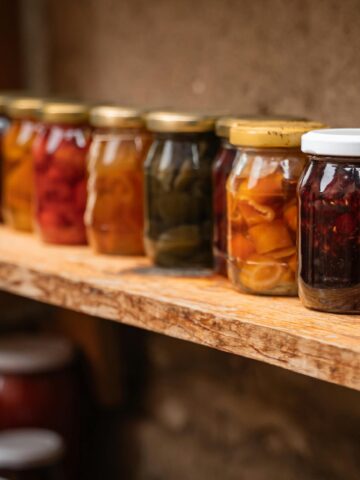
Good storage protects your hard work. Remember to use glass jars for dry goods and canned foods, label everything with contents and dates, store grains in airtight containers, and keep pantry shelves cool, dark, and dry.
Rotation is key. Use what you preserve and replenish regularly.
Step 5: Build Your Pantry Season by Season
Homestead pantries follow the rhythm of the land.
- Spring: herbs, early greens, eggs
- Summer: fruits, vegetables, jams, sauces
- Fall: grains, squash, beans, root crops
- Winter: soups, broths, baking staples
Let the seasons guide your focus.

Step 6: Add Homemade Convenience Foods
A truly functional pantry supports busy days too. Consider stocking sourdough starter & dried discard, pancake and biscuit mixes, bone broth, tomato sauces and soups, and ready-to-use canned meals. These make from-scratch living sustainable.
Common Mistakes to Avoid
- Buying everything at once
- Preserving foods you don’t eat
- Ignoring storage conditions
- Letting perfection stop progress
A homestead pantry is meant to be lived in.
Frequently Asked Questions: Building a Homestead Pantry From Scratch
Do I need a lot of space to build a homestead pantry?
No. A homestead pantry can be built in a small cabinet, closet, or even a few shelves. It’s more about smart storage and intentional choices than square footage.
How much should I spend to get started?
You can start with what you already have. Build slowly by adding staples a little at a time, especially during sales or harvest seasons.
What are the most important pantry items to start with?
Focus on foods you use weekly: grains, beans, baking staples, fats, and preserved foods your family already enjoys.
Do I need to know how to can food to have a homestead pantry?
No. Canning is helpful, but not required. Dehydrating, freezing, fermenting, and buying shelf-stable staples are all great ways to begin.
How long do pantry foods last?
Shelf life depends on the food and storage conditions. Properly stored grains can last years, while home-canned foods are best used within 12–18 months.
How do I keep track of what I have?
Label everything with dates and rotate items regularly. Simple inventory lists or pantry printables can help prevent waste.
What if my family doesn’t eat everything I preserve?
Build your pantry around real meals and habits. Start small, test recipes, and only preserve foods your family truly enjoys.
Is building a homestead pantry worth the effort?
Absolutely. A well-stocked pantry saves money, reduces stress, supports from-scratch cooking, and brings peace of mind through every season.

A Pantry That Brings Peace
Building a homestead pantry from scratch is an act of care for your family, your future, and your home. Each jar tells a story of seasons past and meals yet to come. Over time, those shelves become a quiet assurance that you’re prepared, capable, and deeply connected to your food.
Join My Homestead Pantry & From-Scratch Living Community
If you want step-by-step guidance on building your homestead pantry, learning food preservation, sourdough baking, and creating sustainable rhythms in your kitchen, I’d love to invite you into my Skool community. Inside, you’ll find practical lessons, printable checklists, encouragement, and a welcoming group of homesteaders walking this path together. Join us and start filling your pantry with confidence one shelf at a time.

Hi, I’m Victoria!
I document our homesteading journey on YouTube: covering sourdough, fresh milled bread, gardening, and simple living. Click here to watch, learn, and be inspired to start your own homestead at home.
Comments
No Comments