

This post contains affiliate links. This means I earn a small commission at no cost to you. You can view my affiliate disclosure here.
Carrots are one of those vegetables nearly everyone wants to grow, and almost everyone struggles with at first. They’re delicious, versatile, and loved by gardeners of all skill levels, but they DO require the right conditions. The good news? Once you understand what carrots need, they’re actually incredibly easy and rewarding.
Carrots are one of my favorite fall grown vegetables. They do well in the early spring or fall, but avoid planting them in the summer unless you live in a cooler climate.
Whether you’re gardening in raised beds, containers, or backyard rows, this guide walks you through exactly how to grow long, straight, sweet carrots from seed to harvest.
Table of Contents
- Why Carrots Can Be Tricky And How to Fix It
- Best Varieties for Beginners
- Soil Preparation (The Most Important Step)
- How to Plant Carrot Seeds
- Watering Requirements
- Thinning for Strong Root Growth
- Fertilizing (Slow + Steady Wins)
- Common Problems & How to Prevent Them
- Pests & Diseases
- How to Harvest Carrots
- How to Store Carrots
- Companion Plants
- FAQ
1. Why Carrots Can Be Tricky—And How to Fix It
Most carrot failures come down to soil structure. Carrots grow underground, so anything that stops the root, from a rock to a hard clay wall, causes short, split, or twisted carrots.
If you fix the soil, you fix the carrot.
2. Best Carrot Varieties for Beginners
If you’re new, start with these dependable options:
- Nantes – sweet, cylindrical, coreless
- Danvers – forgiving in heavier soils
- Kuroda – heat tolerant, great for southern growers
- Paris Market – small and round, forgiving in shallow beds

3. Soil Preparation (The Critical Step)
Carrots Need:
✔ Loose
✔ Deep
✔ Sandy
✔ Rock-free soil
Perfect Soil Ratio:
- 50% compost
- 30% sandy loam
- 20% garden soil
Loosen soil 12–15 inches deep. Carrots will not push through hard layers. Add a little sand if needed.
What to Avoid:
✘ Fresh manure
✘ High nitrogen
✘ Heavy clay
These cause hairy or forked carrots.

4. How to Plant Carrot Seeds
Carrot seeds are tiny and slow to germinate.
Steps:
- Direct-sow seeds ¼" deep.
- Water thoroughly.
- Keep soil evenly moist for 10–20 days.
- Use a board, burlap, or cardboard over the soil to hold moisture during germination.
Remove the board the moment you see sprouts.
Spacing:
- Thin to 2 inches apart
5. Watering Requirements
Carrots need consistent shallow moisture.
Watering Schedule:
- Keep top 1" of soil moist during germination
- After sprouting, water deeply 1–2x per week
- Avoid drought → then heavy watering → causes root splitting
Mulch keeps moisture stable.

6. Thinning for Strong Roots
Do NOT skip thinning.
Crowded carrots:
- Stay skinny
- Twist around each other
- Never form proper roots
Thin to 2 inches when seedlings reach 2–3 inches tall.
7. Fertilizing
Carrots do best with low nitrogen.
Use fertilizers with:
- Higher P (phosphorus)
- Good K (potassium)
Avoid fertilizers like 10-10-10 unless very lightly applied.
8. Common Problems & Prevention
Forked Carrots
Cause: rocks, clods, manure
Cracked Carrots
Cause: irregular watering
Short Carrots
Cause: shallow planting bed or hardpan
Bitter Flavor
Cause: heat stress
9. Pests & Diseases
Carrot Rust Fly
Use row covers from day one.
Avoid thinning during daylight (releases scent).
Aphids
Wash off with water or use neem oil.
Root-knot Nematodes
Rotate crops yearly.
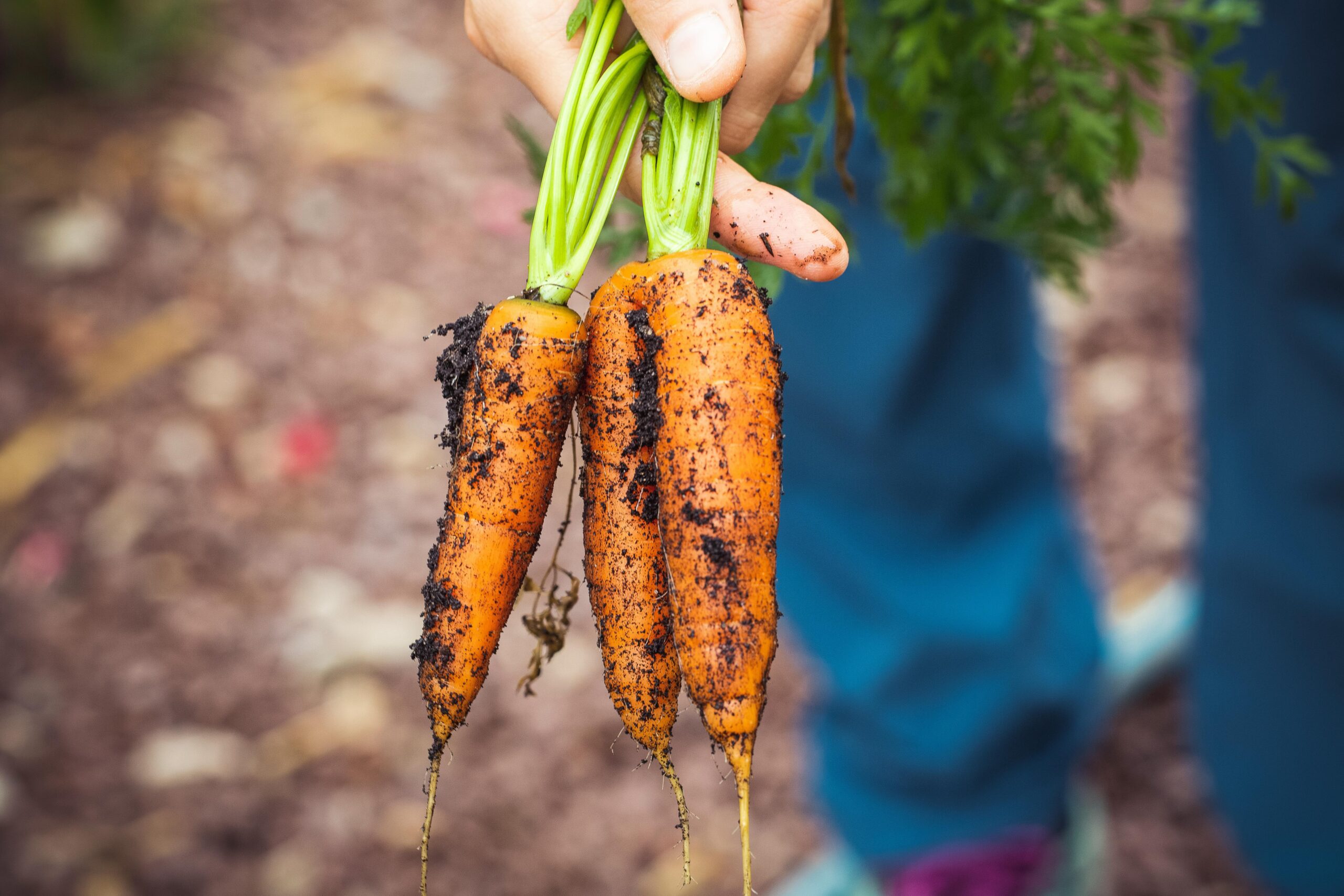
10. How to Harvest Carrots
Carrots are ready when they reach ¾–1" diameter.
To harvest:
- Loosen soil around them
- Pull straight upward grabbing onto the top of root, not the leaves.
For sweeter carrots, leave them in the ground until after a frost.
11. How to Store Carrots
- Trim greens
- Store unwashed
- Keep in fridge in a plastic bag
- Or store in sand in a root cellar
12. Best Companion Plants
Good:
- Lettuce
- Radishes
- Onions
- Leeks
Avoid:
- Dill
- Parsnips
13. Carrot FAQ
Why didn’t my carrots germinate?
Carrot seeds need constant moisture. Covering the soil helps.
Why are my carrots hairy?
Too much nitrogen.
Can carrots grow in containers?
Yes, use deep pots, 12–14".
Final Thoughts
Carrots are one of my favorite fall vegetables to grow and they store for a while in the root cellar. Once you get carrot seeds to germinate, and thin them, they pretty much grow with minimal effort but feel super rewarding when you harvest them.


Comments
No Comments