

This post contains affiliate links. This means I earn a small commission at no cost to you. You can view my affiliate disclosure here.
There’s nothing quite like lining your pantry shelves with jars of canned tomato sauce: deep red, sun-ripened, and ready for soups, pasta nights, and slow-simmered stews long after summer fades.

If you grow tomatoes, learning how to make safe, water bath canned tomato sauce is one of the most practical homestead skills you can build. It reduces waste, preserves flavor at peak ripeness, and gives you full control over what goes into your food.
Today I’m sharing a simple, tested and safe method for canning tomato sauce using proper acidification and USDA-approved water bath practices because pantry peace of mind matters just as much as flavor.
If you'd like more step by step canning guidance and safe recipes, join me over in my food preservation course. There we go in depth into everything you need to know to safely preserve and build your pantry. And if you need a refresher on water bath canning basics, I have an overview here.
My sourdough was flat and business was slow

When I first started homesteading, my sourdough was dense and flat, my garden struggled, and it seemed like I was scrambling to get people to notice my business, let alone, buy my products. And for a time, I burnt out.
After years of trial and error, analyzing hundreds of businesses from other sectors, and just pure grit...
I created a free Zero to Homestead Skool Community: a place where homesteaders of all levels share wins, troubleshoot challenges, and get guidance from experienced peers. By joining, you’ll access step-by-step guides to build traditional skills (sourdough, fresh milled flour, traditional foods, preserving, livestock, gardening, and more) plus full courses, workshops, and homestead business-building resources with a supportive network to help your homestead thrive.
Why Proper Acidification Matters
Tomatoes are often considered high-acid, but modern varieties vary in acidity. To safely water bath can tomato sauce, you must add bottled lemon juice or citric acid to ensure a safe pH level.
This step is not optional.
Following tested canning guidelines prevents the risk of botulism and ensures your jars are shelf-stable.
Ingredients (For About 7 Quarts)
- 20–25 pounds ripe paste or sauce tomatoes
- Bottled lemon juice OR citric acid (see measurements below)
- 1 teaspoon salt per quart (optional, for flavor only)
For Safe Acidification:
Per quart jar:
- 2 tablespoons bottled lemon juice OR
- ½ teaspoon citric acid
Per pint jar:
- 1 tablespoon bottled lemon juice OR
- ¼ teaspoon citric acid
Always use bottled lemon juice (not fresh) because the acidity is standardized.
Equipment Needed
- Water bath canner with rack
- Quart or pint canning jars
- New lids and bands
- Jar lifter
- Large stock pot
- Food mill or blender (optional)
Step-by-Step: How to Safely Can Tomato Sauce
1. Prepare the Tomatoes
Wash tomatoes thoroughly.
Remove cores and blemishes. Quarter large tomatoes.
Simmer tomatoes in a large pot over medium heat until soft and skins loosen (about 20 minutes).
2. Remove Skins & Seeds (Optional but Recommended)
Run softened tomatoes through a food mill to remove skins and seeds.
If you don’t have a food mill, you can blend and strain through a fine sieve.
Return smooth pulp to the pot.
3. Reduce the Sauce
Simmer uncovered until the sauce reaches your desired thickness.
Stir frequently to prevent scorching.
Thicker sauce requires longer cooking time (typically 1–2 hours).
4. Prepare Jars & Canner
Wash jars in hot, soapy water. Keep hot until ready to fill.
Fill water bath canner halfway with water and begin heating.
5. Add Acid to Each Jar
Before filling jars, add acid directly into each jar:
- Quarts: 2 tablespoons bottled lemon juice or ½ teaspoon citric acid
- Pints: 1 tablespoon bottled lemon juice or ¼ teaspoon citric acid
You may also add 1 teaspoon salt per quart if desired.

6. Fill Jars
Ladle hot tomato sauce into jars, leaving ½ inch headspace.
Remove air bubbles with a non-metallic utensil.
Wipe rims clean. Apply lids and bands fingertip-tight.
7. Process in Water Bath Canner
Place jars in canner with water covering jars by at least 1–2 inches.
Bring to a rolling boil and process:
- Pints: 35 minutes
- Quarts: 40 minutes
(Adjust for altitude if above 1,000 feet.)
Keep water at a steady boil for the full processing time.
8. Cool & Check Seals
Remove jars and place on towel-lined counter.
Let cool undisturbed for 12–24 hours.
Check seals: lids should not flex when pressed.
Store sealed jars in a cool, dark place for up to 12–18 months.
Altitude Adjustments
If you live above 1,000 feet, processing times must be increased according to USDA guidelines. Always check a reliable canning resource for your exact elevation.
Tips for the Best Homemade Canned Tomato Sauce
- Use paste tomatoes (like Roma) for thicker sauce.
- Don’t skip acidification.
- Maintain proper headspace.
- Adjust processing time for altitude.
- Label jars with date and batch.
Safe canning is simple when you follow tested methods.
What to Make With Your Canned Tomato Sauce
- Spaghetti and meatballs
- Homemade pizza sauce
- Tomato soup
- Chili
- Casseroles
- Shakshuka
- Slow cooker meals
There’s something deeply satisfying about opening a jar in January that was grown and preserved in July.
Frequently Asked Questions About Canned Tomato Sauce
Is it safe to water bath can tomato sauce?
Yes, as long as you properly acidify each jar with bottled lemon juice or citric acid. Tomatoes vary in acidity, so added acid is required for safe water bath canning. Always follow tested USDA processing times and adjust for altitude.
Can I skip the lemon juice if my tomatoes are very acidic?
No. Even if your tomatoes taste acidic, modern varieties are unpredictable in pH. You must add bottled lemon juice or citric acid to ensure the sauce is safe for shelf storage.
Can I use fresh lemon juice instead of bottled?
For safe canning, use bottled lemon juice only. Bottled juice has standardized acidity levels, while fresh lemons vary and may not provide enough acidity.
Do I have to remove the skins and seeds?
It’s recommended for best texture and consistency, but it is not required for safety. Removing skins and seeds produces a smoother, more traditional tomato sauce.
How long does home canned tomato sauce last?
Properly processed and sealed jars can last 12–18 months when stored in a cool, dark place. For best flavor and quality, use within one year.
What if a jar doesn’t seal?
If a lid fails to seal within 24 hours:
- Refrigerate and use within a few days
- Or reprocess within 24 hours using a new lid and full processing time
Never store unsealed jars at room temperature.
Do I need a pressure canner for tomato sauce?
No, tomato sauce can be safely processed in a water bath canner if properly acidified. However, some people prefer pressure canning as an alternative method.
How do I adjust processing time for altitude?
If you live above 1,000 feet, you must increase processing time according to USDA altitude guidelines. Always verify your elevation and follow an approved adjustment chart.
Can I add onions, garlic, or herbs before canning?
You may add small amounts of dried herbs. However, adding large quantities of low-acid ingredients (like onions, peppers, or garlic) can change acidity levels and require a tested pressure-canning recipe. For safety, keep additions minimal unless following an approved tested recipe.
How do I know if canned tomato sauce has spoiled?
Discard the jar if you notice:
- Bulging lids
- Leaking
- Mold
- Unpleasant odor upon opening
- Spurting liquid
When in doubt, throw it out. Safety always comes first.
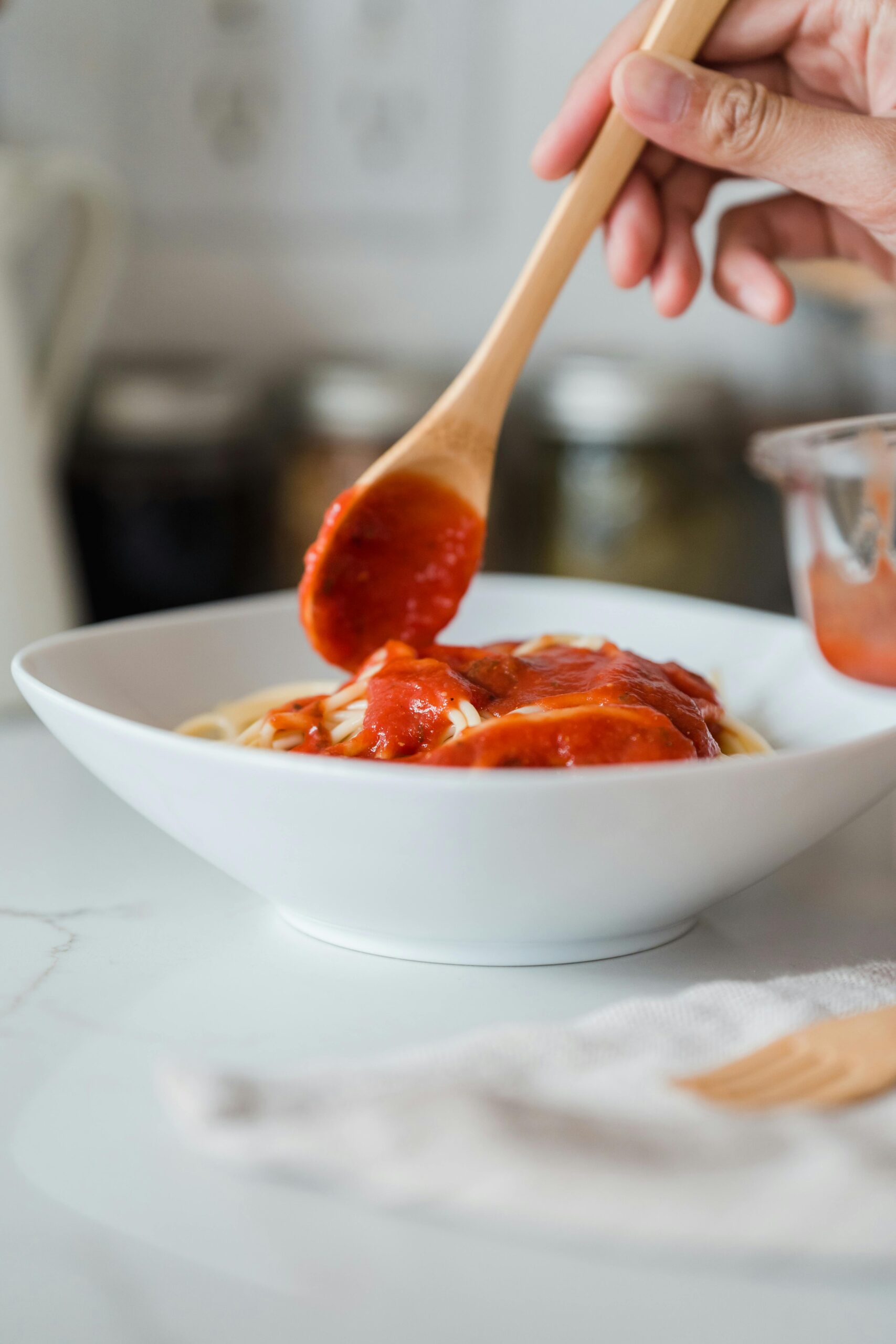
The Beauty of Safe Food Preservation
Canning tomato sauce isn’t flashy. It’s steady work. Warm kitchen. Steam on the windows. A rhythm of filling jars and tightening bands.
But it builds something lasting.
It builds a pantry you can rely on.
It builds skills that matter.
It builds resilience.
Join My Skool Community
If you’re learning practical homestead skills like safe water bath canning, sourdough baking, fresh milled flour, seed starting, soil blocking, and seasonal planning, I’d love to invite you into my Skool community.
Inside, we focus on building real systems that work in everyday life. No guesswork. No shortcuts that compromise safety. Just steady, capable skill-building.
If you’re ready to grow, preserve, and provide with confidence, come join us.
Let’s fill those pantry shelves safely and sustainably.
If you make this recipe, be sure to leave me a star rating and a comment below. Share what you made and tag me on Instagram@keepingitholistic! For more simple sourdough recipes & guidance, small-space gardening tips, and cozy, slow living inspiration, subscribe to my newsletter and follow me on YouTube and Instagram!
📖 Recipe

Canned Tomato Sauce (Water Bath Method)
Equipment
- Water bath canner with rack
- Pint or quart canning jars
- New lids and bands
- Jar lifter
- Large stock pot
- Food mill or sieve (recommended)
Ingredients
- 20-25 lbs ripe paste or sauce tomatoes
- 1 teaspoon salt per quart optional, for flavor only
- Bottled lemon juice OR citric acid for safe acidification, see below
Per Quart Jar
- 2 tablespoons bottled lemon juice OR
- ½ teaspoon citric acid
Per Pint Jar
- 1 tablespoon bottled lemon juice OR
- ¼ teaspoon citric acid
Instructions
Prepare Tomatoes:
- Wash tomatoes thoroughly. Remove cores and blemishes. Quarter large tomatoes.
Cook Tomatoes:
- Place tomatoes in a large pot. Simmer over medium heat until softened and skins loosen (about 20 minutes).
Remove Skins & Seeds (Recommended):
- Run softened tomatoes through a food mill or sieve to remove skins and seeds. Return pulp to pot.
Reduce Sauce:
- Simmer uncovered until sauce reaches desired thickness (1–2 hours). Stir frequently to prevent scorching.
Prepare Jars & Canner:
- Wash jars in hot, soapy water and keep hot until filling. Fill water bath canner halfway and begin heating.
Add Acid to Jars:
- Add bottled lemon juice or citric acid directly to each hot jar according to jar size (see measurements above). Add salt if desired.
Fill Jars:
- Ladle hot sauce into jars, leaving ½ inch headspace. Remove air bubbles. Wipe rims clean. Apply lids and bands fingertip-tight.
Process:
- Place jars in canner. Ensure water covers jars by at least 1–2 inches. Bring to a rolling boil.
- Process pints for 35 minutes
- Process quarts for 40 minutes
- (Adjust processing time for altitude if above 1,000 feet.)
Cool & Check Seals:
- Remove jars and cool undisturbed for 12–24 hours. Check seals before storing.
Notes

Hi, I’m Victoria!
I document our homesteading journey on YouTube: covering sourdough, fresh milled bread, gardening, and simple living. Click here to watch, learn, and be inspired to start your own homestead at home.


Comments
No Comments